
Evaluate How Engineers Actually Build & Debug
Stop testing algorithm memorization that has nothing to do with real production code. ConceptNinjas immerses developers in realistic multi-file environments where they resolve bugs, implement REST endpoints, and optimize data queries under proctored conditions.

Who Needs Scenario Assessments, When It's Needed, and What It Solves
See how multi-file scenario evaluations transform technical screening from subjective puzzle games into rigorous, job-aligned engineering benchmarks.
Engineering Teams Hiring Mid, Senior & Staff Developers
VPs of Eng, CTOs, Staff Architects & Talent Acquisition
Engineered for technology companies that build complex production systems. If your team builds distributed microservices, modern web apps, or cloud infrastructure, scenario assessments evaluate the exact skills developers need on day one.
Key Decision Makers & Teams
- CTOs and VPs of Engineering wanting high-signal, zero-fluff screening
- Senior and Staff Engineers tired of reviewing low-quality take-home tests
- Engineering Managers hiring for Full-Stack, Backend, and DevOps seats
- Enterprise Recruiters needing objective, tamper-proof proof of candidate competence
When LeetCode Memorization Fails to Predict Production Success
Hiring Bottlenecks & Critical Decision Moments
Traditional algorithmic puzzles only test whether a candidate crammed dynamic programming. Scenario assessments are deployed at the technical evaluation stage when teams need realistic proof of engineering execution.
Critical Trigger Points & Bottlenecks
- When candidates ace whiteboard algorithms but struggle to structure multi-file Git repos
- When senior engineers waste 5+ hours grading take-home assignments that candidates cheated on
- When you need to assess how developers handle production bugs, deadlocks, and refactoring
- When hiring remote developers globally and requiring strict anti-cheat proctoring
Simulate a Real First Day on Your Engineering Team
Predictable, Tamper-Evident Engineering shortlists
Instead of isolated code puzzles, candidates enter a real-world multi-file codebase in their browser. They fix failing endpoints, optimize slow queries, and write tests while automated proctoring verifies authentic work.
92%
On-the-job skill correlation
80%
Take-home grading time saved
3.5x
Higher completion rate vs take-homes
100%
Automated test suite scoring
Measurable Business Outcomes
- Eliminate 4-5 hours of manual code reviews by senior engineering panel members
- Evaluate modular architecture, error logging, and test coverage objectively
- Multi-screen and tamper-proof proctoring prevents ghostwriters and external assistance
Realistic Multi-File Codebases Evaluated on ConceptNinjas
Explore concrete developer challenges spanning backend microservices, full-stack Next.js, and enterprise Java that candidates solve under proctored supervision.
Microservice Connection Pool Exhaustion & Async Concurrency Triage
Candidates receive a multi-file FastAPI and PostgreSQL service experiencing connection pool timeouts under simulated burst traffic. They must identify unclosed async sessions, implement Redis distributed locking, configure connection pooling with asyncpg and SQLAlchemy, and resolve database transaction deadlocks.
Target Tech Stack & Keywords
Candidate Competencies Evaluated
- Diagnosing database connection leaks and session lifecycles under load
- Implementing distributed concurrency control using Redis locks
- Writing asynchronous unit tests with pytest-asyncio
- Configuring query index optimizations to eliminate sequential table scans
Verified Business Outcome
Guarantees hired backend engineers can triage high-traffic production bottlenecks without bringing down downstream database clusters.
Next.js 15 & React 19 Full-Stack Server Component Feature Build
Candidates are handed a multi-file Next.js App Router codebase. They must implement a high-converting dynamic checkout workflow using React Server Components, Server Actions, optimistic mutations with useOptimistic, and resolve an elusive SSR hydration mismatch triggered by client browser APIs.
Target Tech Stack & Keywords
Candidate Competencies Evaluated
- Clean architectural boundaries between Server and Client Components
- Type-safe payload validation using Zod schemas inside Server Actions
- Implementing optimistic UI state transitions with zero screen flicker
- Diagnosing and correcting server-side rendering hydration mismatches
Verified Business Outcome
Filters out candidates stuck in legacy client-only React patterns and identifies engineers proficient in high-performance modern Next.js.
Spring Boot Transaction Rollback & Apache Kafka Event Streaming
Candidates work within a multi-module Maven Spring Boot repository. An order checkout endpoint fails to roll back inventory reservations when a downstream payment gateway times out. Candidates must configure transactional boundaries (@Transactional), implement the Saga compensation pattern, and publish failure events to Apache Kafka.
Target Tech Stack & Keywords
Candidate Competencies Evaluated
- Correct transactional isolation levels and rollback propagation policies
- Event-driven error recovery and Dead Letter Queue (DLQ) routing in Kafka
- JPA entity relationship tuning to prevent critical N+1 query slowdowns
- Comprehensive integration testing using JUnit 5 and Testcontainers
Verified Business Outcome
Verifies enterprise-grade distributed systems competence for mission-critical fintech, banking, and enterprise SaaS roles.
The Critical Flaw of LeetCode Puzzle Interviews
Memorizing dynamic programming tricks on a whiteboard doesn't tell you if a candidate writes readable code, understands REST architecture, handles deadlocks, or writes test suites. Scenario assessments bridge this gap by simulating an actual day on your engineering team.
Simulate Real PR Reviews: See how candidates read existing codebases, adhere to formatting standards, and implement changes cleanly.
Multi-File Context: Problems span models, controllers, services, and configuration files, matching real Git repositories.
Zero LeetCode Cramming: Candidates cannot pass simply by memorizing public problem solutions online.
Holistic Engineering Competency Dimensions
Code Reusability & Architecture
Assess how candidates structure modules, handle dependency injection, and separate business logic for long-term maintainability.
Edge Case & Test Coverage
Evaluate whether candidates write thorough automated unit tests and consider boundary conditions before shipping.
Debugging & Production Triage
Immerse candidates in a realistic codebase with failing endpoints and race conditions to observe how they diagnose errors.
Engineering Best Practices
Analyze naming conventions, git commit granularity, error logging, and adherence to clean code standards.
Frequently Asked Questions About Scenarios
Learn how multi-file assessments are configured, proctored, and evaluated against real-world engineering standards.
Have specific questions about implementation, ATS integrations, or private team pilots?
Explore More Hiring & Assessment Solutions
Combine specialized evaluation environments — from interactive coding sandboxes to AI-proctored conversational interviews.

AI Interview Bot
Human-like asynchronous interview screening for faster technical shortlisting.
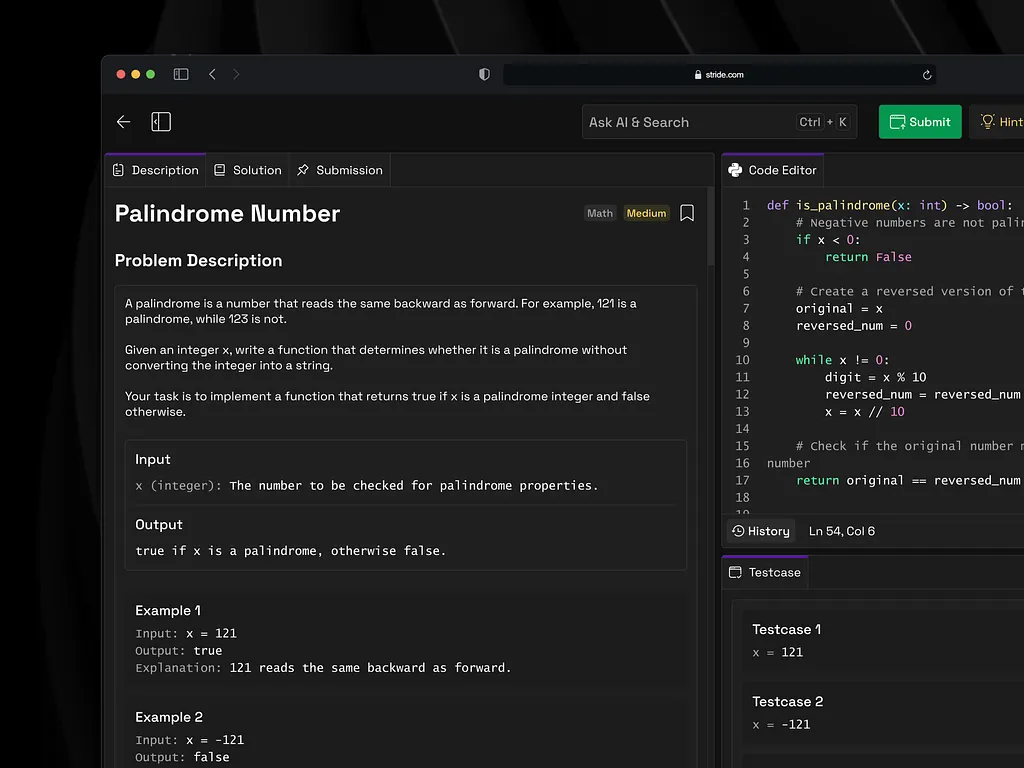
Compiler Integrated Programming
Live coding plus MCQ assessments with automated evaluation and proctoring in 40+ languages.
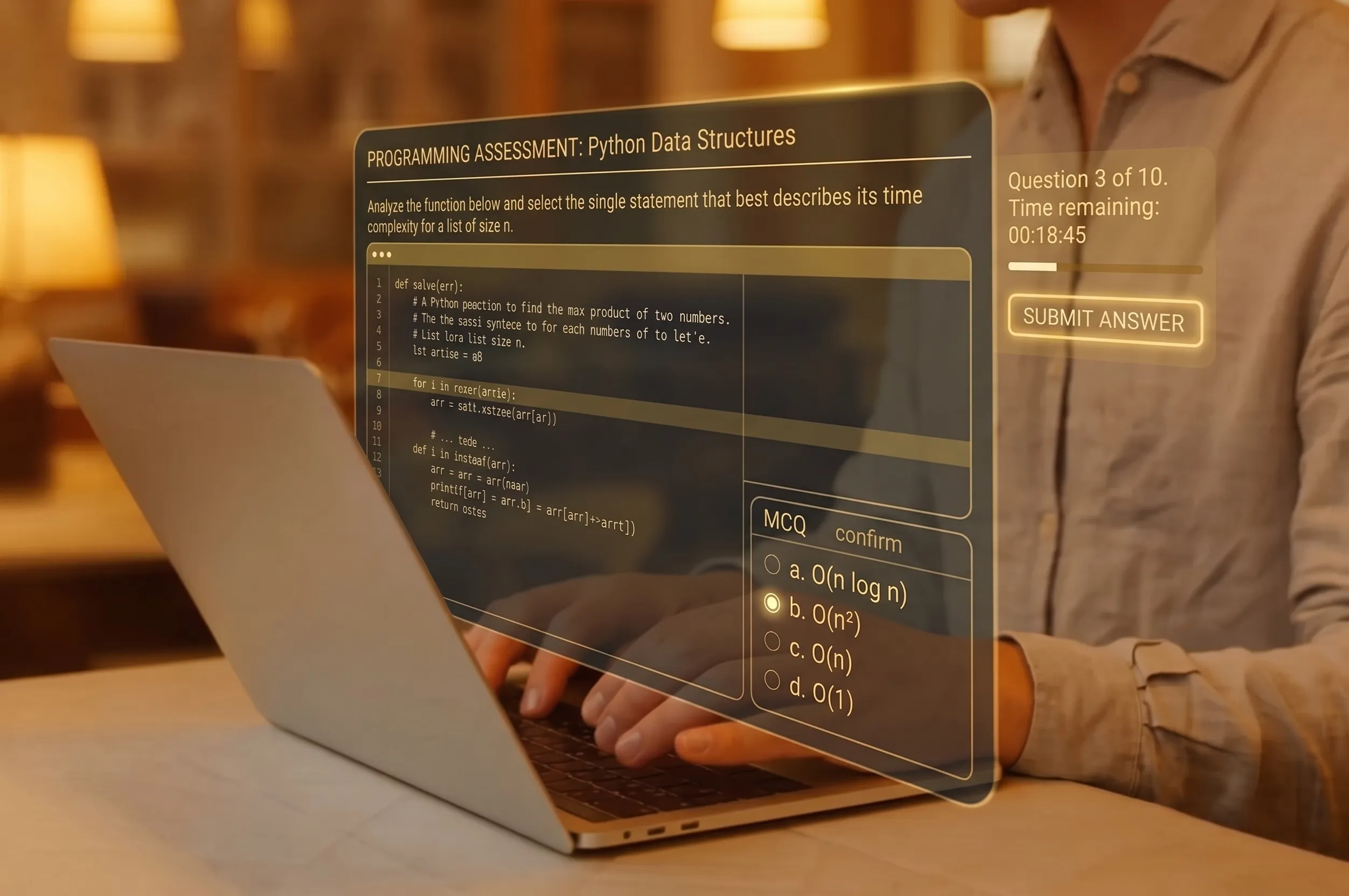
Programming Question (MCQ)
Fast, structured fresher screening with role-mapped programming MCQ score bands.
Ready to Build a Technical Hiring Engine Your Team Can Trust?
Join thousands of engineering managers and recruiters who screen with certainty, cut panel fatigue, and hire top developers in record time.